

The Questions We Get Every Day. Answered Plainly.
Fifteen years behind a counter teaches you which questions come up again and again. This page answers the most common ones: what’s in the plant, what the labels mean, and how to read the numbers on a menu. It’s general information, not medical advice, and our family is always happy to talk it through in person.
Cannabinoids: What the Plant Makes
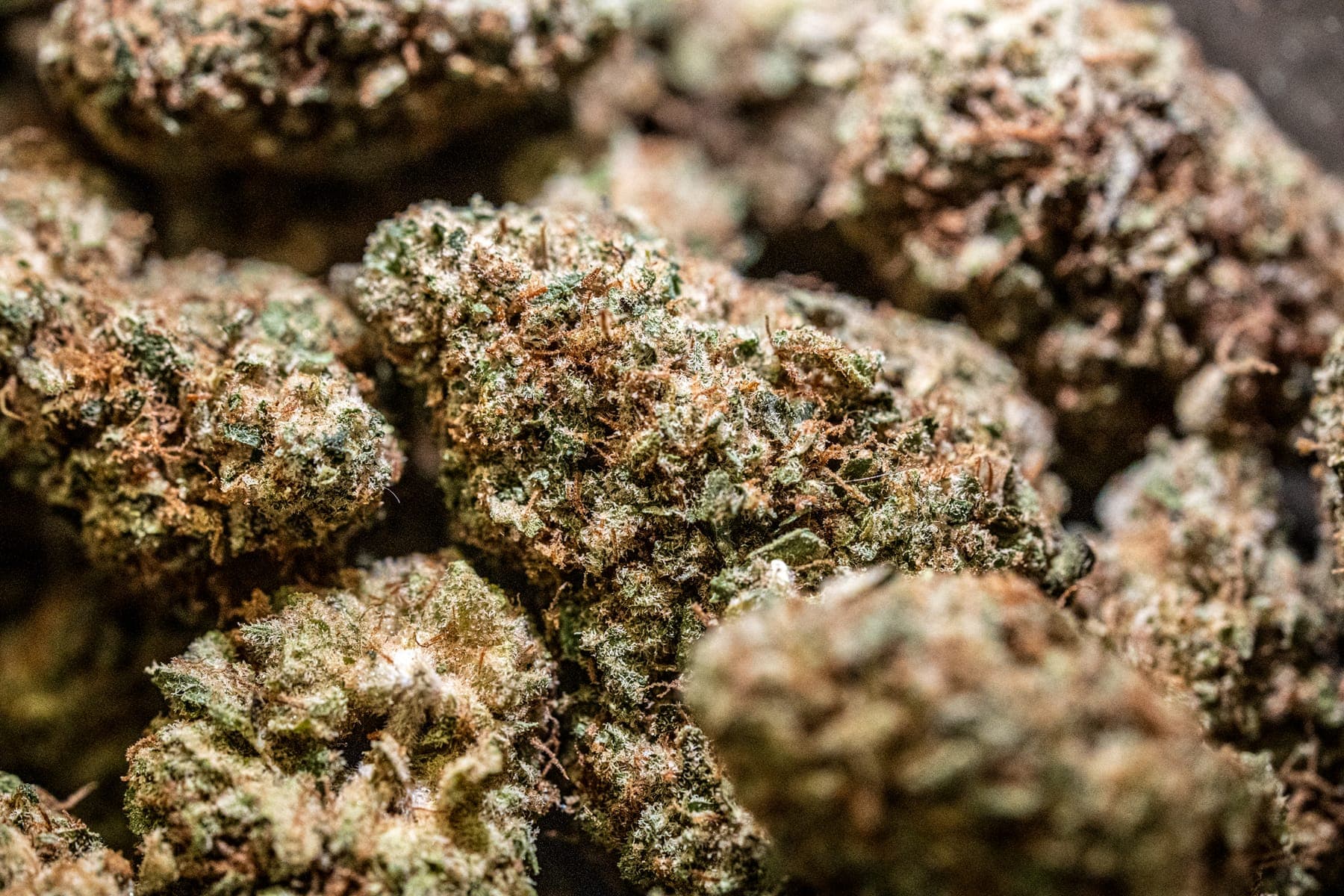
Cannabinoids are the compounds cannabis produces in its resin glands, the frosty trichomes you can see on good flower. Lab testing measures them, labels list them, and they’re the numbers you see on our menu. A few you’ll run into:
THC
Delta-9-tetrahydrocannabinol
The cannabinoid cannabis is best known for, and the one that makes a product intoxicating. New Mexico requires every product to be lab-tested for it, and that result is the THC number you see on a label or on our menu.
THCA
Tetrahydrocannabinolic acid
The form THC takes in the raw plant. It converts to THC when heated, which is why a label's “Total THC” counts THCA too. Raw flower tests high in THCA and low in THC, which is normal.
CBD
Cannabidiol
A non-intoxicating cannabinoid. Some products lead with it and some pair it with THC. A “1:1” on a label means equal parts CBD and THC.
CBG & CBN
Minor cannabinoids
Present in smaller amounts. You'll see them on lab panels and, increasingly, called out on packaging. Fewer products are built around them, but they're part of the full picture of a strain's chemistry.
Terpenes: Where the Aroma Comes From
Terpenes are the aromatic oils that give each strain its smell and taste. They aren’t unique to cannabis. The same compounds are in citrus peel, pine needles, black pepper, and lavender. Two strains can test at the same THC percentage and be completely different to your nose, and terpenes are the reason. It’s also why we serve flower deli-style: you get to smell it before you buy it.
| Terpene | Aroma | Also found in |
|---|---|---|
| Myrcene | Earthy, musky, ripe fruit | mangoes, hops, lemongrass |
| Limonene | Bright citrus | lemon and orange peel |
| Caryophyllene | Peppery, spicy, woody | black pepper, cloves |
| Pinene | Fresh pine | pine needles, rosemary |
| Linalool | Floral, lavender | lavender, coriander |
| Terpinolene | Piney, herbal, a little sweet | apples, tea tree, nutmeg |
Lab results list terpenes by weight, usually as a percentage. Flower commonly tests between 1% and 3% total terpenes, and the higher end is where the aroma really jumps out of the jar. It’s the profile, not a single number, that tells you what you’re going to taste.
Indica, Sativa, Hybrid: What the Labels Mean
These started as botanical descriptions. Sativa plants grew tall with narrow leaves in warm climates; indica plants grew short and bushy with broad leaves in cooler, mountainous ones. Growers used the words to describe where a plant came from and how it grew.
After decades of crossbreeding, almost every strain on any menu, ours included, is a hybrid of both. So today the label is shorthand for lineage: which family a strain leans toward. It’s a useful starting point, but the label alone tells you less than the strain’s chemistry does.
If you want to know what a strain is really like, look at two things: the terpene profile (how it smells and tastes) and the tested potency. Then ask us. We buy what we’d choose ourselves, and we’ll tell you straight what’s exceptional this week.
Does the Percentage Matter?
Yes, but less than most people think. The THC percentage is the tested potency from state-required lab testing: the share of the product’s weight that is THC. Flower commonly tests in the high teens to mid-twenties. Concentrates and vape oils test far higher because the plant material has been removed. Edibles are measured in milligrams per piece and per package instead of a percentage.
A higher number is not automatically a better product. Freshness, cure, and terpene content shape how flower smells, tastes, and holds up just as much as potency does. A well-grown 19% strain with a loud terpene profile is often the better pick over a bland 30%. That’s why we carry a range instead of chasing the biggest number on the shelf.
How to Read a New Mexico Label
- Total THC / Total CBD
- Includes the acid forms (THCA, CBDA) that convert when heated. This is the number to compare between products.
- Batch or lot number and test date
- Every product on our shelf traces back to a state-required lab result. The batch number is how.
- Net weight
- Grams for flower and concentrates. Edibles list milligrams of THC per serving and per package instead.
- Serving size
- On edibles, the number to read before anything else. New Mexico caps edible purchases at 800 mg of THC per transaction.
Quick Answers
- What's the difference between indica, sativa, and hybrid?
- Originally, plant shape and origin. Sativa plants grew tall with narrow leaves, and indica plants grew short with broad leaves. Today nearly every strain is a hybrid, so the label tells you which family a strain leans toward. Terpene profile and tested potency tell you more about the strain itself.
- Does a higher THC percentage mean a stronger product?
- It means more THC by weight, but potency is only one part of quality. Freshness, cure, and terpene content matter just as much, which is why we stock a range of percentages rather than only the highest.
- What are terpenes?
- The aromatic oils that give each strain its smell and taste. The same compounds are found in citrus peel, pine, black pepper, and lavender, and they're why two strains with identical THC numbers can smell nothing alike.
- What's the difference between THC and THCA?
- THCA is the form found in the raw plant; it becomes THC when heated. “Total THC” on a label accounts for that conversion, which is why it's the number to compare.
- What is CBD?
- A non-intoxicating cannabinoid. It's listed on labels in the same percentages or milligrams as THC, and products containing both are often labeled as a ratio, like 1:1.
- How do I read the numbers on an edible?
- Two numbers matter: milligrams of THC per serving and per package. Read the per-serving figure first. New Mexico limits edible purchases to 800 mg of THC per transaction.
- Is this medical advice?
- No. This page is general information about what's in cannabis and how it's labeled. For anything health-related, talk to a licensed medical professional.
Still have a question? Ask us at the counter. Someone from the family will be glad to answer it.